
While Sustainable Aviation Fuel (SAF) reduces lifecycle CO2 emissions wherever it is used, its wider climate impact is not uniform. The effectiveness of SAF in reducing non-CO2 effects – such as soot emissions, local air quality impacts, and contrail-related warming – depends heavily on where, when, and on which flights it is deployed.
To better understand how limited SAF supplies can deliver greater environmental value, Estuaire collaborated with Clean Air Task Force (CATF) on a new report examining targeted allocation strategies across 16.6 million flights in Europe and the United States. Combining flight-level environmental modelling with operational analysis. The report explores how scarce SAF resources can be directed towards the airports and flights where they can have the most significant impact.
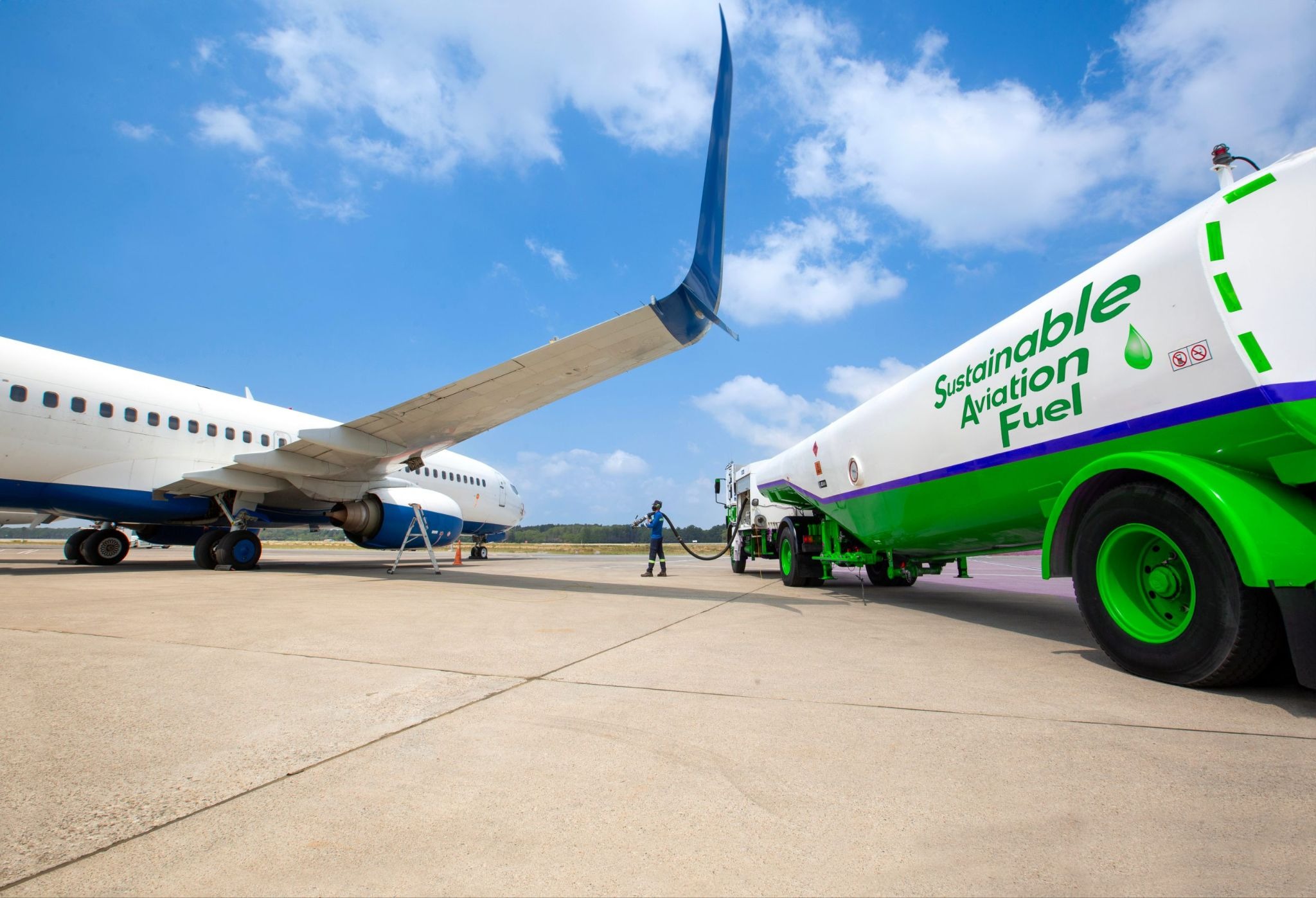
With SAF representing just 0.7% of global jet-fuel demand in 2025, improving how available fuel is deployed is becoming as important as increasing supply itself. The findings show that targeted allocation can increase both the climate and public-health benefits delivered by every tonne of SAF.
Building the Environmental Model
Estuaire served as the primary technical partner for this study, supplying the flight-level data and multi-layered modelling that underpinned the analysis.
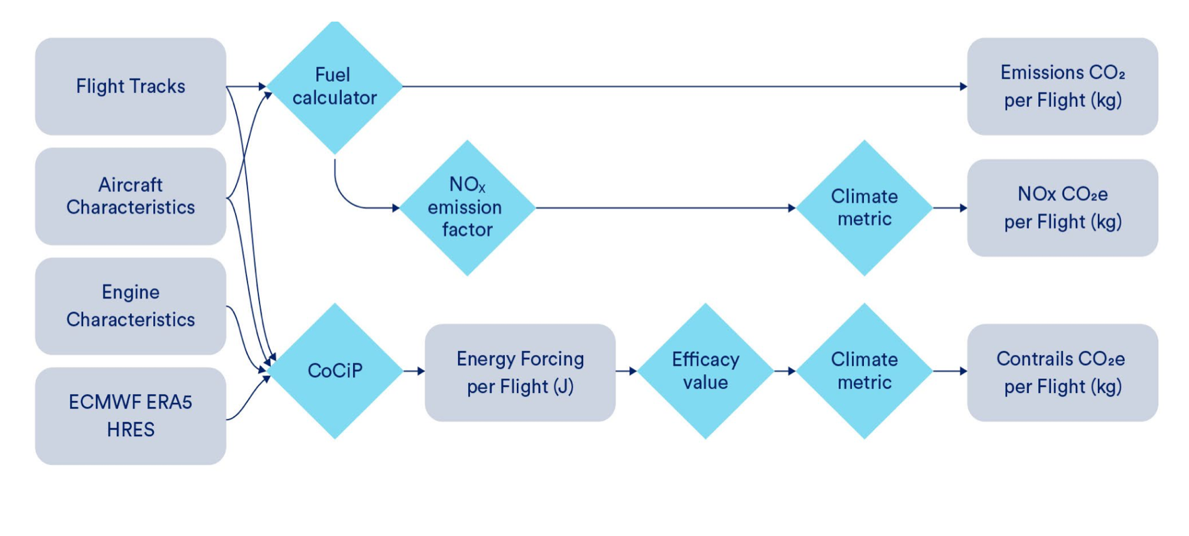
Rather than relying on traffic volumes alone, we combined aircraft trajectories with aircraft and engine characteristics, atmospheric conditions, and flight data to build a detailed environmental profile for individual flights. This allowed us to understand not only where aircraft were flying, but the conditions they encountered and the emissions they produced.
We then applied specialized models to assess different aspects of each flight. CoCiP (Contrail Cirrus Prediction) was used to estimate contrail formation and warming potential at cruise altitude, while ICAO landing-and-take-off methodologies quantified particulate matter (PM) and NOx emissions around airports. Together, these layers created a consistent picture of aviation's climate and air-quality impacts across the network.
Identifying High-Impact Airports
The analysis revealed a highly concentrated pattern, with approximately 2% of flights generating 80% of total modelled contrail warming. This concentration was shaped by route structure, flight distance and exposure to contrail-forming conditions, meaning airports with similar traffic volumes could produce very different climate impacts. Two airports demonstrate this particularly well:
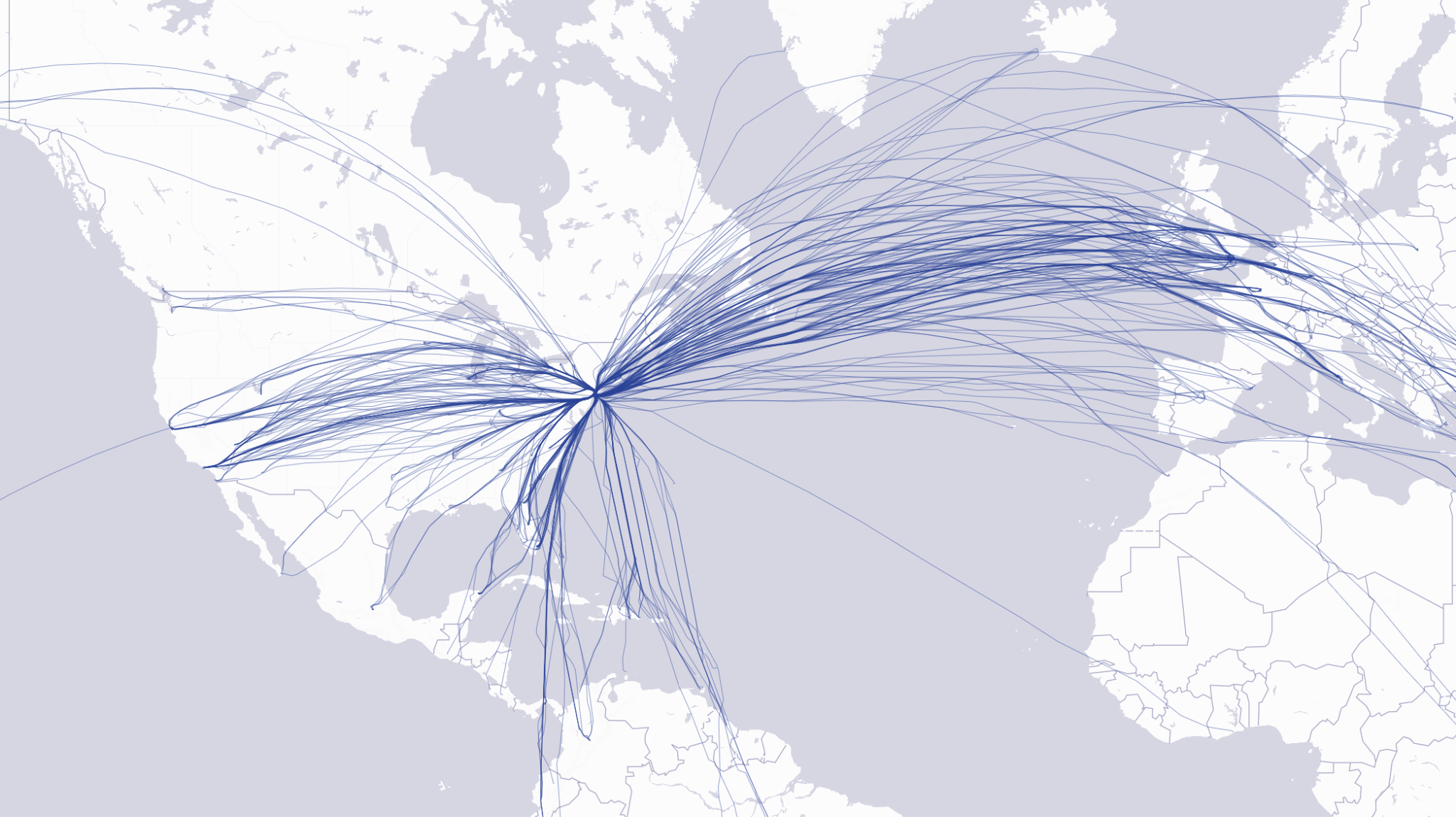
- JFK (New York): Ranked highest among the US airports analyzed due in part to its route network, which exposes a large share of international flights to the North Atlantic – a region prone to ISSR formation, especially in winter.
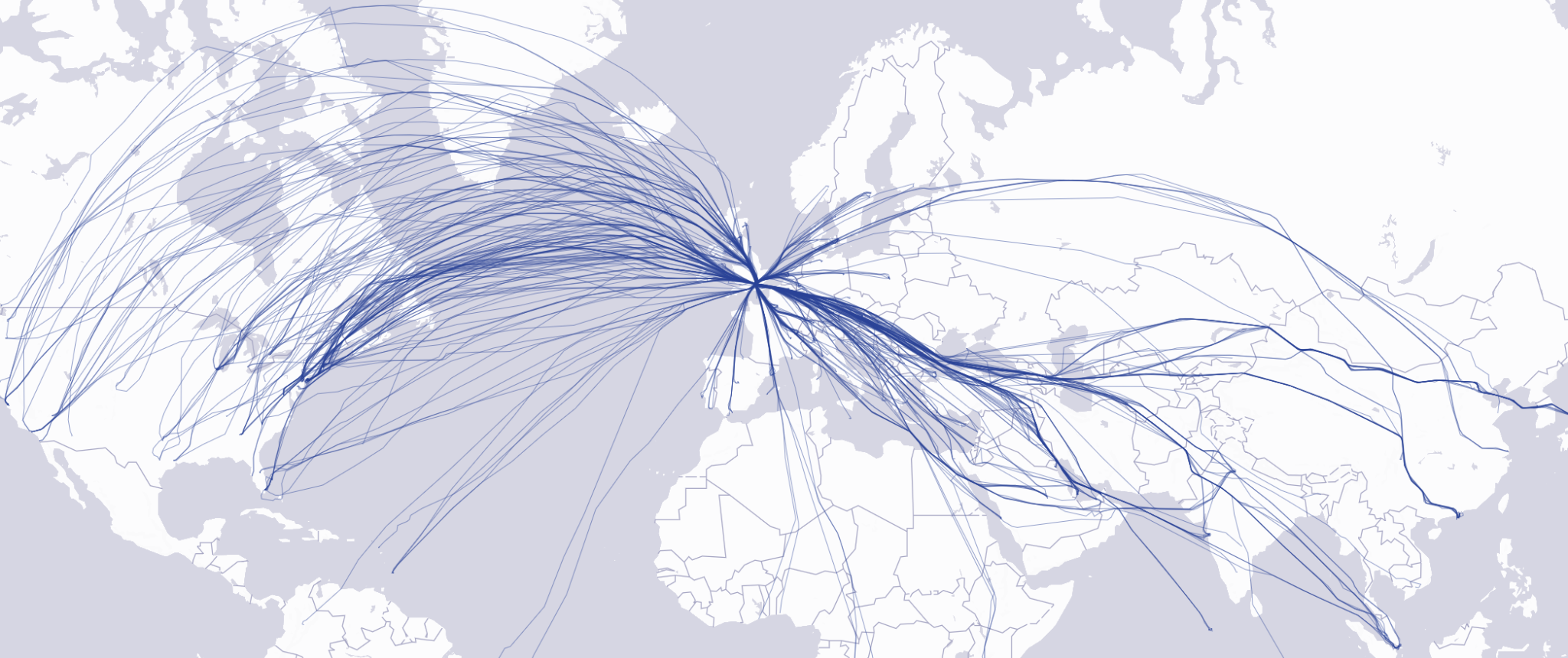
- Heathrow (London): The highest contrail impact among the European airports analyzed, reflecting its high traffic volumes, globally distributed route network, and frequent long-haul operations.
More broadly, the report identified JFK, LAX, and Chicago O’Hare in the United States, and Heathrow, Istanbul, and Paris Charles de Gaulle in Europe, as the strongest candidates for targeted SAF allocation. These airports were selected because they combined significant contrail-related warming with opportunities to improve local air quality.
Linking Climate and Public Health
One of the report’s most significant contributions is its ability to connect flight-level emissions data with estimated public-health outcomes. SAF can reduce particulate emissions during LTO while also lowering the soot-related contribution to contrail warming at altitude.
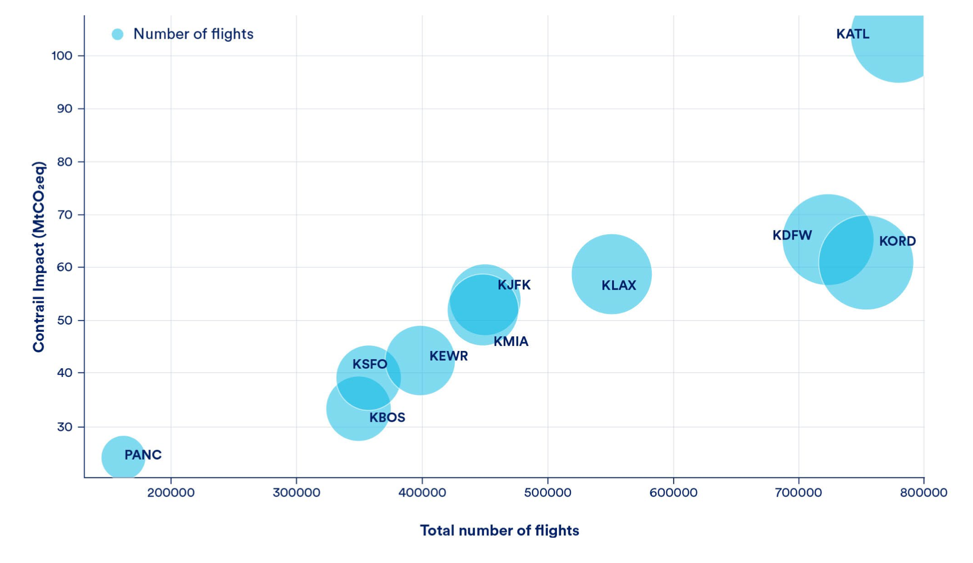
Fleet composition is a critical variable; airports with similar traffic can have vastly different emissions profiles. For instance, Hartsfield-Jackson (Atlanta) is a PM outlier because it serves a high percentage of older-generation aircraft with engines that emit up to 20 times more soot than newer engine technologies. Conversely, targeted SAF at JFK was modelled to produce over $30 million in annual monetized health benefits through avoided premature mortality. The report notes that potentially larger benefits may be expected in Europe, where baseline air-pollution-related mortality is two to three times higher.
As understanding of aviation's non-CO2 effects continues to evolve, ongoing research into additional factors – including fuel sulfur content and volatile particulate matter activation – will help further refine these assessments.
These findings show that the greatest opportunities lie where climate and public-health benefits overlap. Identifying those locations creates the foundation for a more targeted approach to SAF deployment.
Three Strategies for SAF Allocation
As part of the study, we evaluated three distinct allocation strategies to maximise the climate benefit of every drop of SAF:
- Airport-Wide Targeting: The simplest but most fuel-intensive approach, blending SAF into the general fuel supply at selected hubs. At a 50% blend, this reduces LTO PM by 26-28% and contrail-related warming by 30-40%, depending on the airport.
- Time-Based Targeting: Concentrating SAF during winter months or selected departure windows associated with stronger contrail-warming effects. This strategy consistently performs better per tonne of available SAF than airport-wide blending.
- Flight-Based Targeting: By uplifting SAF only onto the small share of flights expected to generate the largest contrail impact, substantial reductions could be achieved with significantly lower fuel requirements. In the modelled upper-bound scenarios, approximately 6–13% of departures were targeted, depending on the airport.
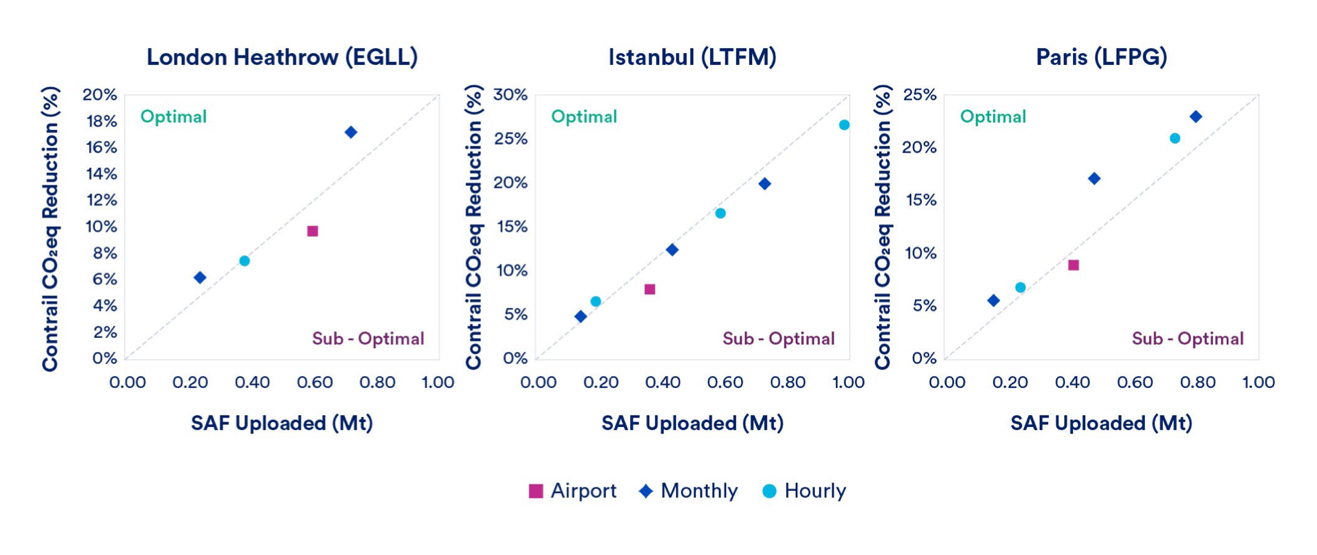
These scenarios illustrate a clear trade-off between operational simplicity and environmental precision. Airport-wide allocation offers the most straightforward path to implementation, while time- and flight-based approaches progressively increase the climate value delivered by each tonne of SAF. The appropriate strategy will ultimately depend not only on environmental performance, but also on the deployment methods of each airport.
Applying Environmental Modelling to SAF Deployment
Turning targeted allocation into real-world practice remains a logistical challenge. Most major airports use shared hydrant systems that make differentiated fuel delivery difficult, although the report highlights the use of fuel trucks as one potential means of introducing greater flexibility. At the same time, initiatives such as QRITOS are helping explore how targeted SAF allocation can be integrated into real-world airport and airline operations.
The value of these approaches extends beyond the report itself. By combining flight trajectories, atmospheric conditions, and operational data, environmental modelling provides a practical basis for deciding where limited SAF resources can deliver the greatest overall benefit. Instead of treating every flight or airport equally, it enables environmental performance to become another consideration in decision-making.
As SAF production continues to scale, the question is becoming not only how much fuel is available, but how it is deployed. Delivering on this opportunity will require close collaboration between airports, airlines, fuel suppliers, and policymakers to align environmental modelling with infrastructure, implementation, and future policy.


.png)