
Artificial intelligence is increasingly reshaping how operational data is accessed and interpreted. At Estuaire, we recently developed “Roger”, an internal AI agent designed to simplify and accelerate access to our aviation data infrastructure.
This article presents how this system is built, how it connects to our database, and how it changes the way internal teams interact with operational datasets.
What Roger does
Roger is a conversational AI agent connected directly to Estuaire's aviation data platform. You ask a question in plain language. It retrieves the data, applies the correct methodology, and returns a verifiable answer in seconds.
Underneath, a coordinator agent reads your question and routes it to the right specialist agent, one that goes and fetches what is actually needed. It can also draw on Estuaire's reference documentation and, where relevant, search the web as a fallback. But you do not need to know any of that. All of this happens without any action required from the user.

Practically
If someone asks about the Pegasus Guidelines, the system verifies that the agent actually read the guidelines, not that it produced something plausible from training data. That distinction is where a lot of AI systems quietly fail, and it is where we put significant engineering effort.
The results stay consistent with the figures your teams already trust from Estuaire's existing dashboards. The answers are the same; you just get more depth. Roger can walk you through the methodology behind a number and explain what is actually driving the impact, not just hand you the figure and leave.
Who it's built for
The people who felt the old workflow most were the teams closest to the decisions:
- ESG and sustainability managers building disclosure reports under regulatory deadlines
- Commercial and strategy teams benchmarking routes and operators without waiting on a data pull
- Lessors and financial institutions who depend on precise, auditable figures for their own obligations
- Non-technical users who knew the right question but couldn't get to the answer without help
Roger gives all of you direct access to the same depth of analysis that previously required a specialist.
Ask Roger Anything About Aviation Data
Whether you're an airport, airline, corporate, OEM or aircraft lessor, Roger turns complex aviation data into clear, actionable answers. Here are just a few examples of the questions you can ask.
1. Airports:
Roger combines operational flight data, emissions modeling and Airport Carbon Accreditation requirements to identify where airports can achieve the greatest emissions reductions while maintaining traffic growth. Rather than providing generic sustainability advice, it analyses the airport's own operations, prioritises the highest-impact initiatives and explains the reasoning behind every recommendation.
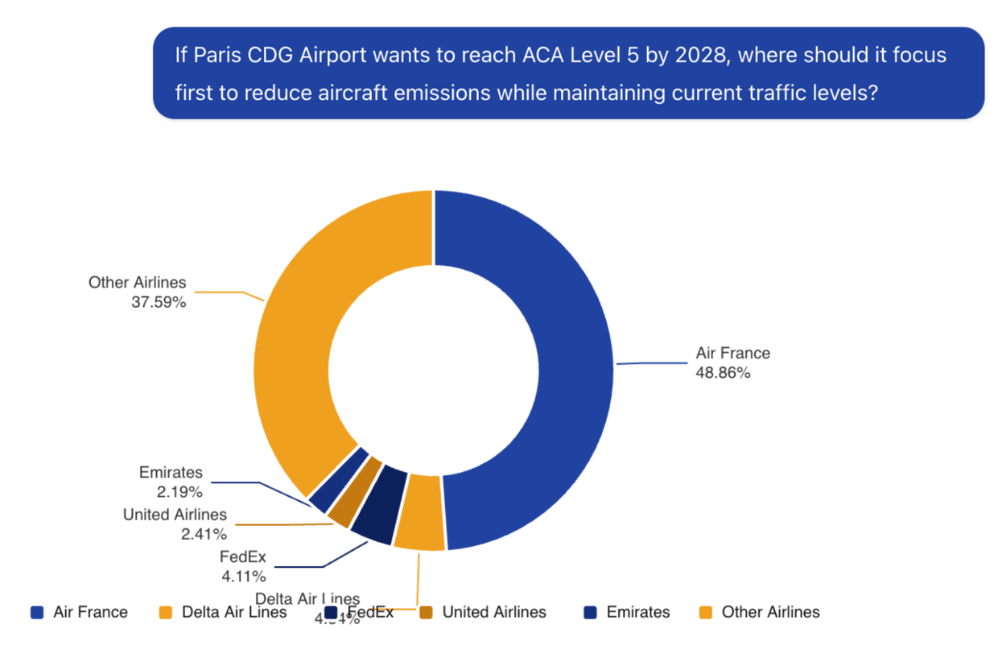
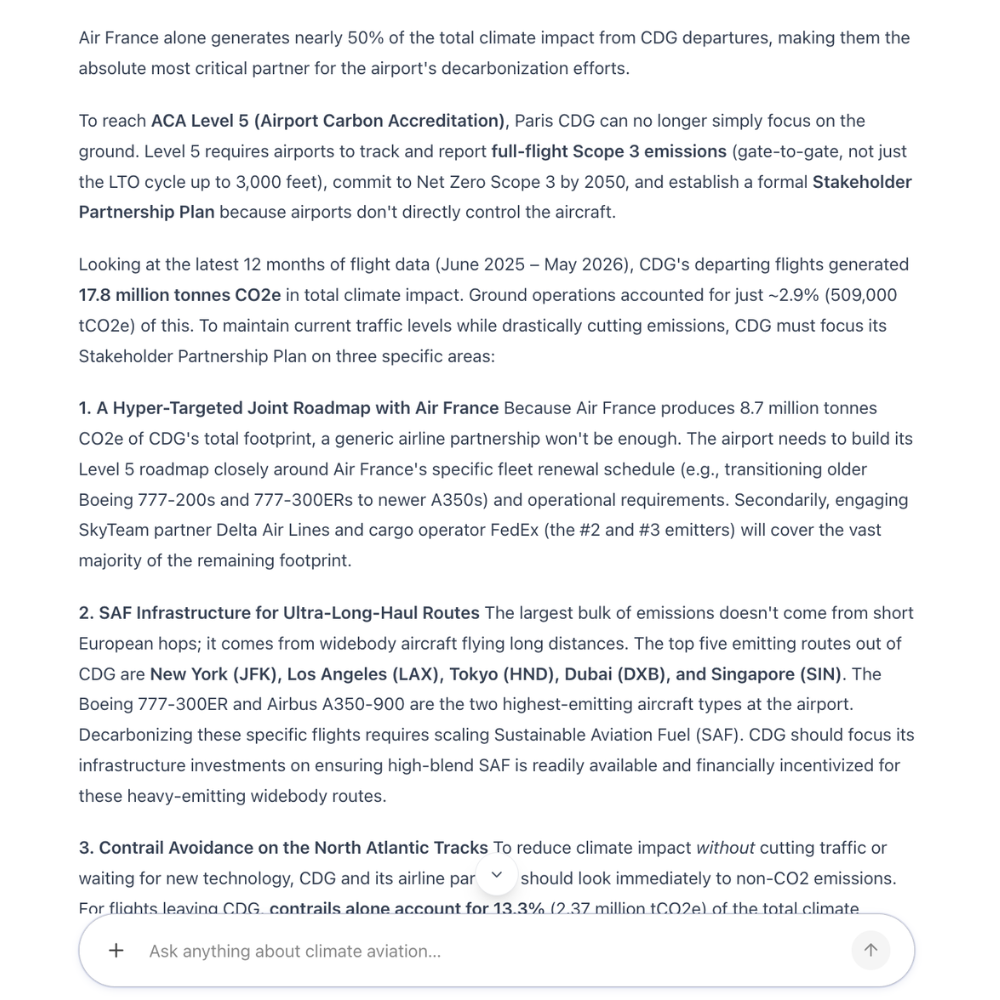
In this example, Roger automatically:
- Analyzes operational flight data to quantify the airport's full-flight climate footprint.
- Interprets ACA Level 5 requirements and translates them into a decarbonization strategy.
- Identifies the highest-impact stakeholders and operational priorities to help the airport achieve its climate objectives.
- Generates actionable recommendations, such as targeted airline engagement, SAF deployment, and contrail mitigation.
- Supports every recommendation with quantitative analysis and automatically generated visualizations.
2. Airlines:
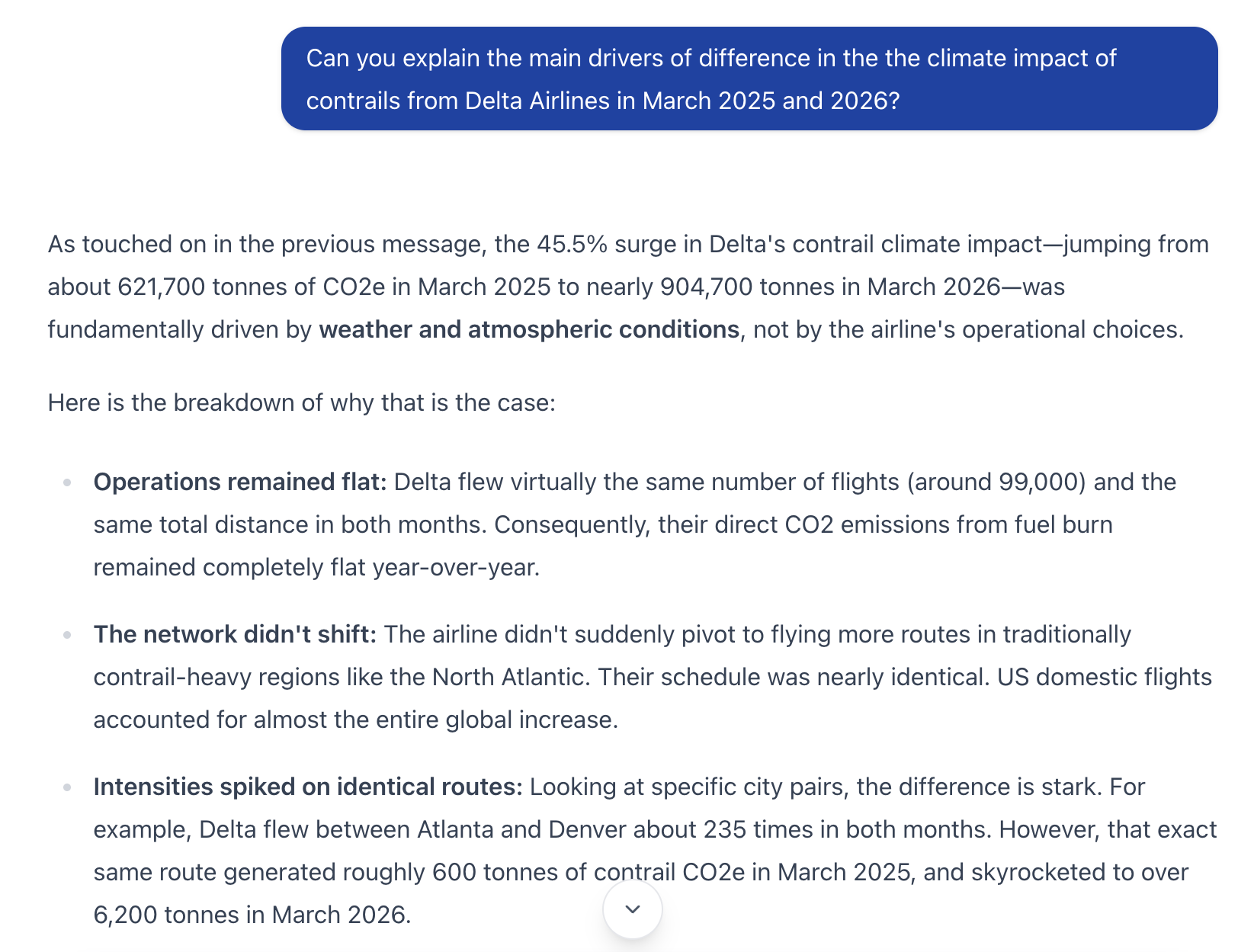
Roger instantly compares emissions across reporting periods, separating direct CO₂ emissions from non-CO₂ effects such as contrails. Rather than returning a single KPI, it highlights where climate performance is changing and automatically visualises the results.
.png)
Roger goes beyond reporting by identifying the root causes behind climate performance changes. In this example, it automatically linked the increase in Delta's total climate impact to persistent contrail formation caused by atmospheric conditions, while confirming that operational activity remained largely unchanged.
.png)
3. Corporates:
Roger helps corporate sustainability and travel teams make smarter travel decisions by comparing airlines on real operational performance rather than generic emissions factors. By combining flight-level emissions data, aircraft efficiency and non-CO₂ impacts, Roger identifies the option that delivers the lowest overall climate impact without compromising travel time or cost.
.png)
4. OEMs:
Roger helps aircraft manufacturers validate environmental performance using real-world operational data rather than certification values alone. By analysing thousands of flights across airlines and routes, Roger identifies where next-generation aircraft deliver the greatest reductions in total climate impact.
.png)
5. Lessors
Roger helps aircraft lessors anticipate how evolving climate regulations could reshape portfolio value and investment strategy. By combining regulatory intelligence with aviation expertise, Roger translates complex policy changes into clear financial and operational implications.
.png)
What is coming next
Roger retains your preferences across sessions, the routes, aircraft types, and operators you work with regularly. We are actively working on dynamic graph generation, so answers can come back as charts when that is clearer than text. And we are collecting automated feedback from users in production to keep sharpening it.


.png)